User-aware Intelligence
Personalized LLMs can adapt responses to user goals, histories, preferences, and contexts. This turns language models into systems that better support long-term interaction and decision-making.
ACM SIGKDD 2026 Tutorial
A Tutorial on Foundations of LLM Personalization
Personalized LLMs for user-aware, reliable, and responsible AI systems.
Abstract
Large language models have become powerful general-purpose systems, but many real-world applications require responses that reflect individual users, evolving needs, and situated context. LLM personalization studies how models can move beyond generic intelligence toward user-aware behavior that is more useful, consistent, and trustworthy in interactive settings.
This tutorial introduces the foundations of LLM personalization by examining how user preferences, interaction histories, profiles, and contextual signals can be represented, retrieved, and aligned with model behavior. We cover major personalization techniques, including retrieval-augmented generation, prompting, representation learning, and reinforcement learning from human feedback.
We also discuss data foundations, personalization granularity, direct and downstream evaluation protocols, benchmarks, metrics, and responsible deployment challenges such as cold-start personalization, privacy, fairness, and multimodal personalization. The topic is central to the KDD community because it connects recommendation, search, user modeling, interactive systems, data mining, and responsible AI.
Why This Tutorial
Personalized LLMs can adapt responses to user goals, histories, preferences, and contexts. This turns language models into systems that better support long-term interaction and decision-making.
The tutorial compares practical techniques for injecting user information into LLMs, from retrieval and prompting to representation learning and preference alignment.
Effective personalization depends on what user signals are available, how they are structured, and how personalization granularity is defined across users, personas, and tasks.
Reliable personalization requires rigorous benchmarks, meaningful metrics, and careful treatment of privacy, fairness, cold-start users, and multimodal contexts.
Schedule
Core contents planned for the confirmed 9:00 AM – 12:00 PM tutorial.
| Part | Topic |
|---|---|
| Part I | Introduction |
| Part II | Personalized Prompting |
| Part III | Personalized Adaptation |
| Part IV | Personalized Alignment |
| Part V | Data Foundations and Evaluation |
| Part VI | Discussion and Future Directions |
Presenters
The following is a list of tutorial speakers and their homepage links.
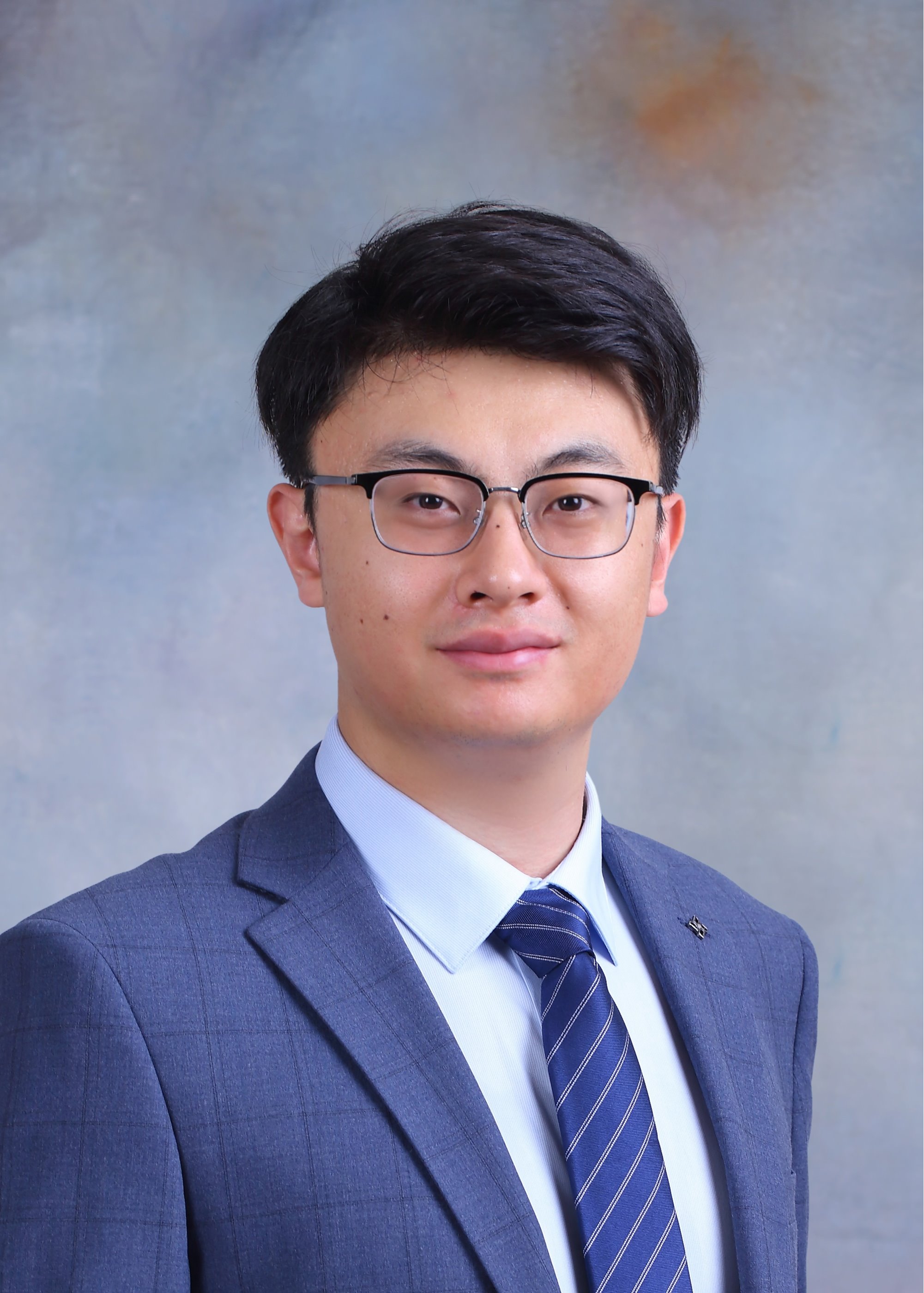
Beihang University
Ruijie Wang is a Professor at the School of Computer Science and Engineering, Beihang University. His research focuses on trustworthy and efficient AI, with an emphasis on large language models, graph learning, temporal data mining, and structured knowledge integration. He has published more than 40 papers in top-tier venues including NeurIPS, ACL, KDD, WWW, SIGIR, and UbiComp. His research has received multiple recognitions including the IEEE DCOSS Best Paper Award and UIUC PhD Fellowship. His work on graph-enhanced LLMs and structured knowledge integration directly aligns with the core technical focus of this tutorial.
Homepage
Nankai University
Qingkai Zeng is an Associate Professor in the College of Computer Science at Nankai University. His research focuses on text mining, knowledge-enhanced LLMs, and knowledge graph reasoning, with an emphasis on improving reliability and interpretability in knowledge-intensive tasks. He has published more than 30 papers in leading venues such as KDD, WWW, ACL, EMNLP, and ICLR, and served as PC member or Area Chair for major conferences. His expertise in knowledge-enhanced LLMs and graph-based reasoning supports the methodological foundations of this tutorial.
Homepage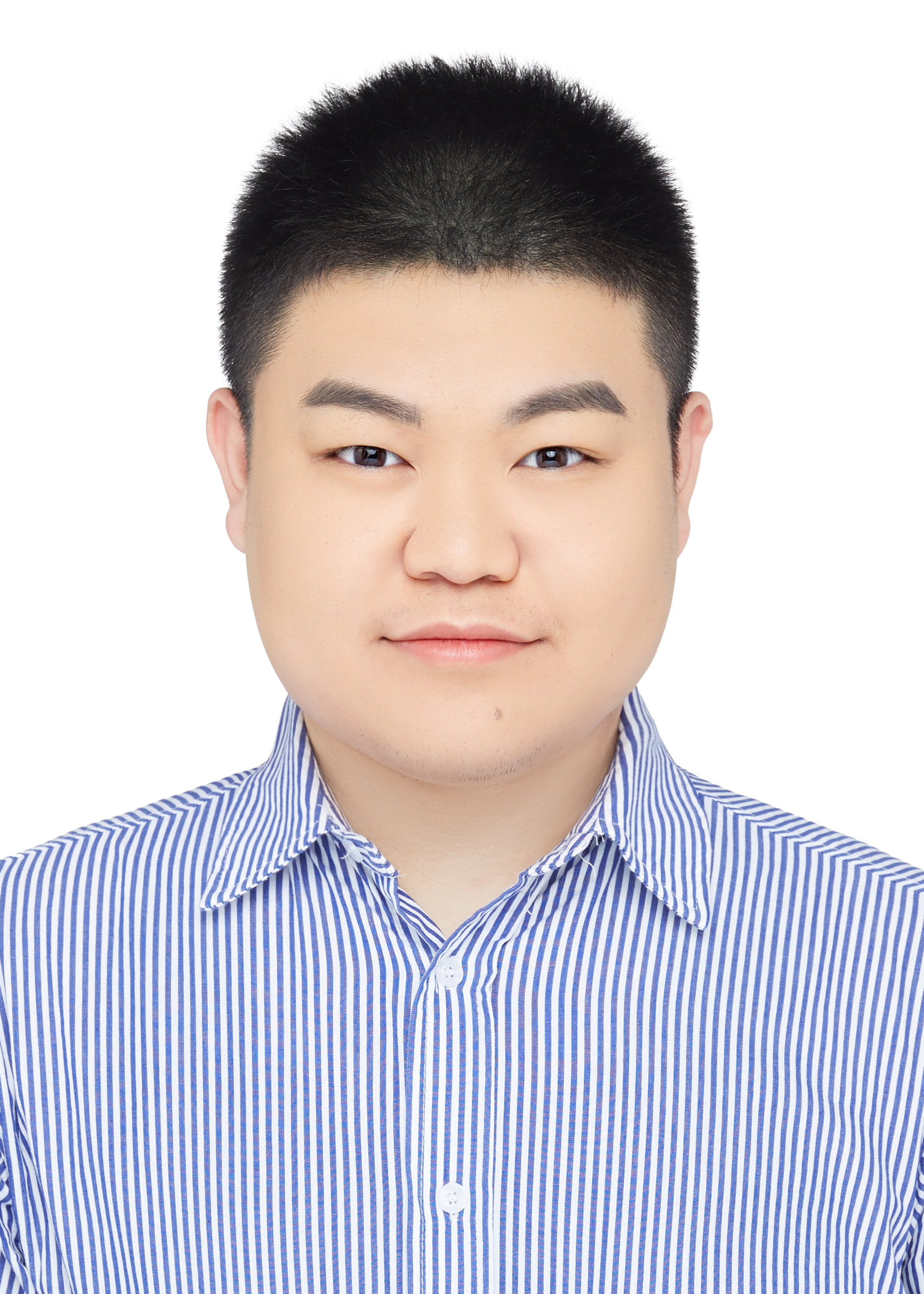
Beihang University
Xuefei Wang is a Ph.D. student at Beihang University. His research focuses on LLM personalization and LLM system implementation, contributing implementation perspectives to this tutorial.
Beihang University
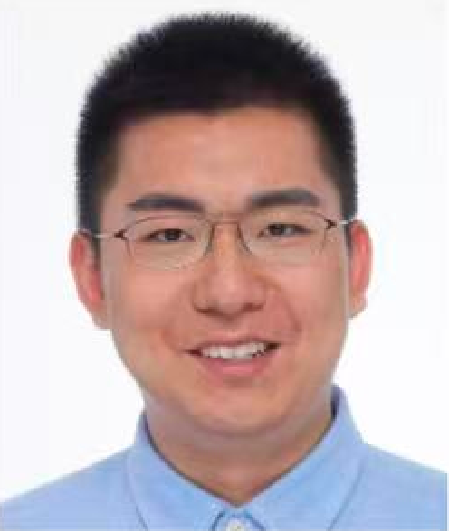
Yuhan Wang is an incoming Ph.D. student at Beihang University. Her research focuses on LLM personalization and continual learning. She has published papers at KDD, ACL, etc., and serves as a program committee member at NeurIPS, etc.
Beijing University of Posts and Telecommunications
Li Sun is an Associate Professor at Beijing University of Posts and Telecommunications. His research focuses on large language models, graph representation learning, and knowledge mining. He has published over 70 papers in premier venues, including ICML, NeurIPS, ICLR, KDD, WWW, AAAI, TPAMI, TKDE, ACM TOIS, and TWEB, and received the ACM CIKM 2022 Best Paper Award. He has served as Area Chair or Program Committee member for major conferences such as KDD, ICML, NeurIPS, ICLR, WWW, IJCAI, and AAAI. His research on graph learning and LLM-based knowledge mining provides key algorithmic perspectives for the tutorial.
Homepage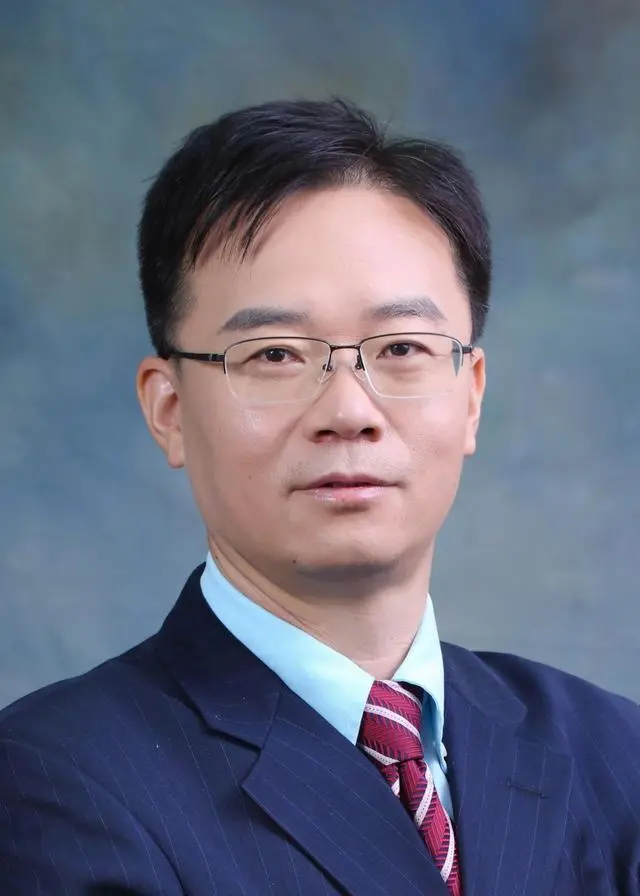
Beihang University
Jianxin Li is a Professor at the School of Computer Science and Engineering and the Beijing Advanced Innovation Center for Big Data and Brain Computing at Beihang University. His research interests include social network analysis, trustworthy machine learning, and large-scale data mining. He has published extensively in leading journals and conferences including TKDE, TDSC, TOIS, TKDD, KDD, AAAI, and WWW. He received the AAAI 2021 Best Paper Award and the DependSys 2017 Best Paper Award. He has also achieved first place in several international data science competitions. He currently serves as Associate Editor of IEEE Transactions on Computers and several other journals.
Homepage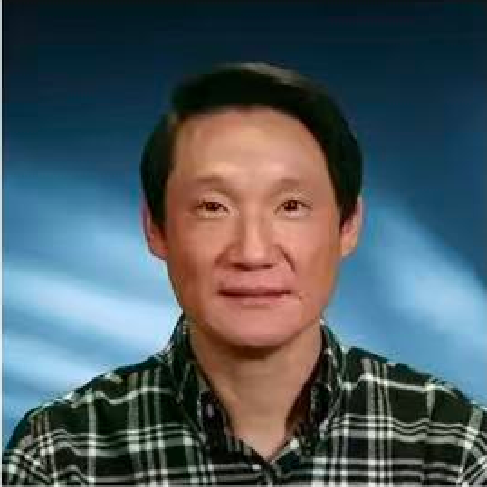
University of Illinois Chicago
Phillip S. Yu is a Distinguished Professor of Computer Science and the Wexler Chair in Information Technology at the University of Illinois Chicago (UIC). Before joining UIC, he managed the Software Tools and Techniques Department at IBM. He is a Fellow of ACM, IEEE, and AAAS. His research spans data mining, graph learning, user behavior modeling, and multimodal large language models. He has published over 1,700 papers with more than 252,000 citations and an h-index of 214. He received the ACM SIGKDD Innovation Award, IEEE Computer Society Technical Achievement Award, and multiple Test-of-Time awards. His pioneering work in graph mining and large-scale data analytics provides foundational insights for the tutorial's discussion of graph-enhanced AI and LLM systems.
HomepageMaterials
Public materials will be added as they become available. The tutorial paper and Introduction slides are available now.
Citation
Initial citation entry based on the tutorial paper. Please verify against the final ACM DL record before publication.
@inproceedings{wang2026generic,
  title     = {From Generic Intelligence to Personalized AI: A Tutorial on Foundations of LLM Personalization},
  author    = {Wang, Ruijie and Zeng, Qingkai and Wang, Xuefei and Wang, Yuhan and Sun, Li and Li, Jianxin and Yu, Phillip S.},
  booktitle = {Proceedings of the 32nd ACM SIGKDD Conference on Knowledge Discovery and Data Mining},
  year      = {2026},
  location  = {Jeju Island, Republic of Korea},
  publisher = {Association for Computing Machinery},
  doi       = {10.1145/3770855.3816457}
}
Contact